
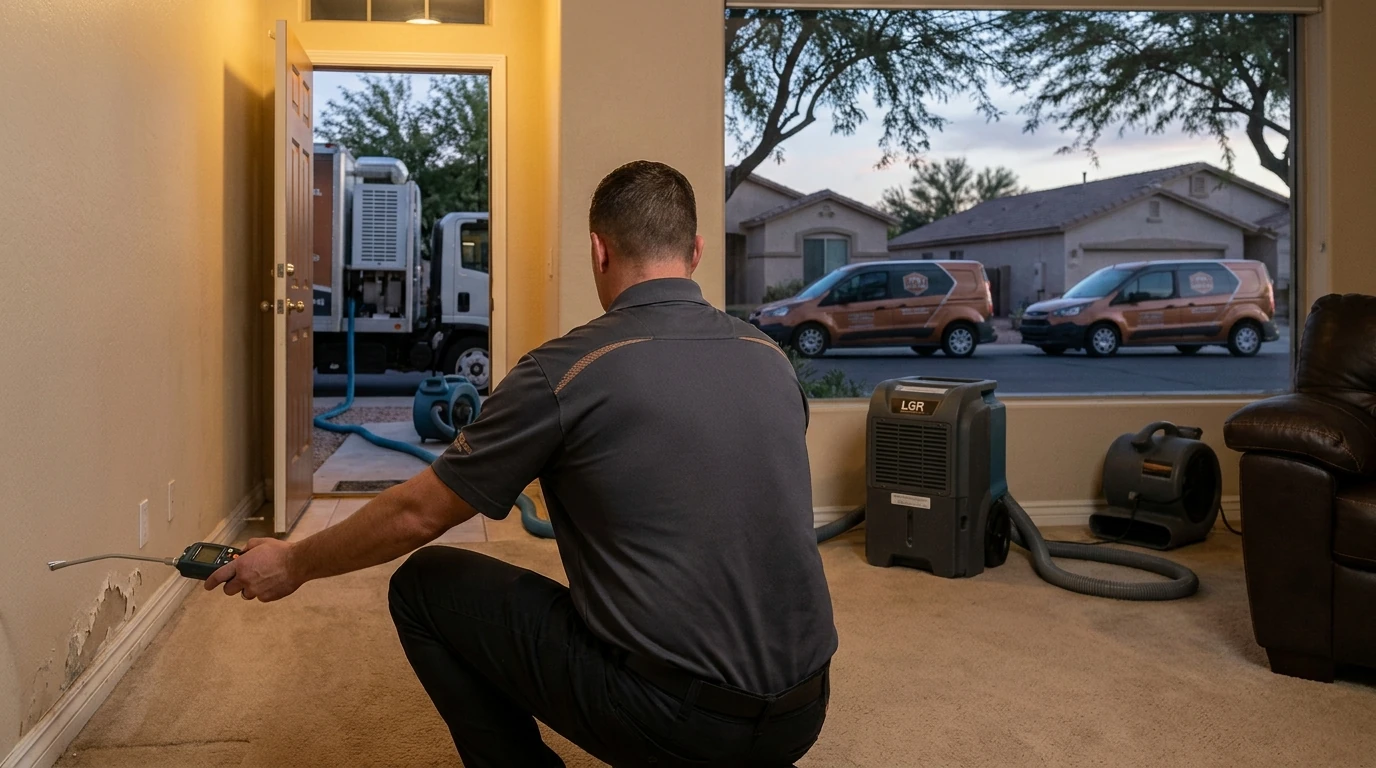
TL;DR: Emergency water damage restoration means a crew extracts standing water, removes soaked materials that can’t be saved, and sets up industrial drying equipment within hours of your call, not days. The first 24 to 48 hours determine whether your home dries out cleanly or develops mold and warped structural materials. In Midland, call a local crew immediately, shut off the water source if you can, and avoid running household fans that spread contaminated water into dry areas.
It’s 11 p.m., the water heater in the garage split at the seam, and there’s an inch of water creeping toward the living room carpet. Or maybe it’s a slab leak under the kitchen that’s been running for who knows how long. Either way, you’re standing in it right now, wondering what to do before anyone with equipment shows up. Here’s the straight version, written for someone who needs an answer in the next five minutes, not a research project.
What Should I Do While Waiting for a Water Damage Crew in Midland?
Shut off the water at the source first, either the fixture’s supply valve or the home’s main shutoff, then stop touching anything electrical in standing water. Those two actions matter more than anything else you can do without training or equipment.
After that: move furniture legs onto foil or wood blocks if the water is still shallow, pull up area rugs, and get photos of everything before you move it. Insurance adjusters want to see the damage as it happened, not after it’s been tidied. Don’t run your window AC or ceiling fans if the water came from a toilet, sewer backup, or any source you’re not sure is clean, since that can aerosolize contaminants into rooms the water never reached.
If the water is rising fast, from a burst supply line or a slab leak that’s been running overnight, get the main shutoff closed and call for help immediately rather than trying to mop your way through it. Our burst pipe checklist walks through the shutoff locations most Midland homes use, including the older Permian Basin housing stock around town where main valves are sometimes in unexpected spots like a side yard box or garage wall.
Why Does the First 24 to 48 Hours Matter So Much?
Because drywall, insulation, and wood framing start supporting mold growth within 24 to 48 hours of staying wet, according to guidance from the EPA. Once that window closes, a simple extraction-and-dry job can turn into a remediation job with demolition and containment.
The industry standard crews follow for this, the IICRC S500, calls for structural materials to be dried to a specific moisture content before a job is considered complete, not just visually dry. That’s the difference between a surface that looks fine and a wall cavity that’s still holding moisture behind the drywall, feeding mold spores that were already present in the air.
In Midland’s climate, humidity swings matter here too. Summer monsoon moisture and the area’s clay-heavy soil can keep ground-level water from draining the way it would in sandier ground, which is part of why slab leaks and foundation seepage show up so often in older homes near downtown and in the neighborhoods off Garfield and Midland Drive. Standing water sitting on a slab for 24 hours in August humidity dries very differently than the same water in February.
What Equipment Do Emergency Crews Use to Extract and Dry Water?
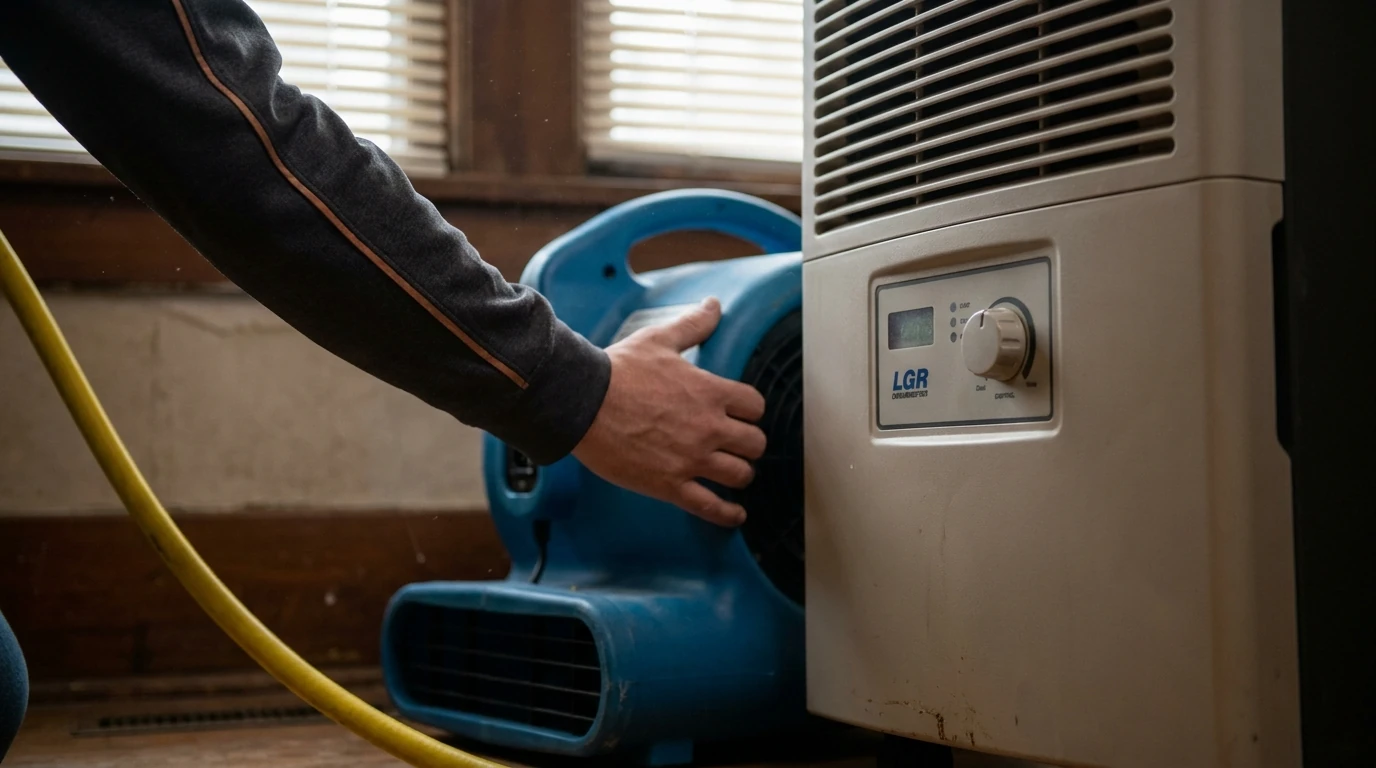
Emergency crews use truck-mounted or portable extractors to pull standing water first, then place low-grain-refrigerant (LGR) dehumidifiers and high-velocity air movers to dry what’s left in the materials. The extraction removes the bulk of the water in the first hour or two; the drying equipment runs for several days after.
A typical setup for a single affected room includes one or two air movers positioned to create airflow across wet surfaces, an LGR dehumidifier sized to the cubic footage of the space, and a moisture meter used daily to track drying progress in the drywall, baseboards, and subfloor. For water that’s gotten under flooring or behind walls, crews sometimes use injectidry systems or remove baseboards to dry wall cavities directly rather than waiting for moisture to migrate out on its own.
Monitoring is the part people skip when they try to DIY this with a box fan and a dehumidifier from the hardware store. A moisture meter reading that looks dry on day two can still show elevated moisture in the wall cavity on day four if drying isn’t tracked and adjusted.
Is Emergency Water Damage Restoration Available 24/7 in Midland?
ACS Enterprise answers calls 24/7 and dispatches crews to Midland, Odessa, and surrounding Permian Basin communities for water emergencies at any hour. A burst pipe at 2 a.m. doesn’t wait for business hours, and neither should the response.
When you call, be ready to describe the water source if you know it (supply line, appliance, roof leak, sewage backup), roughly how many rooms are affected, and whether the water has touched any electrical outlets or panels. That lets the crew bring the right equipment on the first trip instead of making a second run for something they didn’t expect.
For jobs beyond a single room, like a whole first floor after a slab leak ran overnight, see our guide on water mitigation in Midland for what a larger-scale response actually involves.
What Happens After the Water Is Extracted?
Once standing water is gone, the crew sets up monitored drying equipment, documents the loss for your insurance claim, and checks back daily until moisture readings hit target levels in every affected material. That documentation step matters more than most homeowners realize going in.
Texas homeowners policies generally cover sudden, accidental water damage, like a pipe that bursts without warning, but they typically exclude damage from long-term neglect, like a slow leak you should have caught months ago. The Texas Department of Insurance has a plain breakdown of how that distinction plays out in claims. A written scope of work, moisture logs, and before photos are what turn a disputed claim into an approved one.
Once the structure is dry, the job moves into repairs, whether that’s new drywall and baseboards or, for bigger losses, full reconstruction. Our team scopes that separately once drying is confirmed complete, so you’re not paying to rebuild over materials that are still wet.
If water is active in your home right now, call ACS Enterprise at (432) 847-4704 before it spreads further, and have your water shutoff located in the meantime.
About ACS Enterprise
ACS Enterprise is a locally owned, licensed and insured restoration company based in Midland, TX, serving the Permian Basin since 2019. The team, led by Aldredo Moreno, handles emergency water removal, water cleanup, sewage cleanup, storm damage restoration, and related cleaning services across Midland, Odessa, Big Spring, and the surrounding area, and holds a 5.0 Google rating across 362 reviews.