
Tile & Grout Cleaning in Midland
Tile & grout cleaning in Midland and surrounding areas. Insurance billing accepted. Call (432) 847-4704.
Grout starts white or buff, and somewhere along the way it turns a shade of gray or brown that no amount of mopping seems to touch. That color shift is not surface dirt, it is years of soil, soap residue, and organic matter packed into the porous channels between your tiles, often sealed in by repeated wet mopping that pushed grime deeper rather than lifting it out. Standard mop-and-bucket cleaning cannot reach it. Tile and grout cleaning at a professional level uses pressurized hot water, pH-adjusted chemistry, and mechanical agitation to pull that contamination out from the inside of the grout rather than just washing across the top.
What tile and grout cleaning actually involves
Grout is a cement-based material, and cement is porous by nature. Every time a floor gets wet, that pore structure wicks in whatever is suspended in the water: cooking grease in kitchens, soap scum in bathrooms, tracked-in caliche dust and West Texas red clay in entryways and mudrooms. Over time, the grout darkens unevenly, and the tile surface develops a film that dulls the glaze and makes the floor look perpetually dirty even after it has just been mopped.
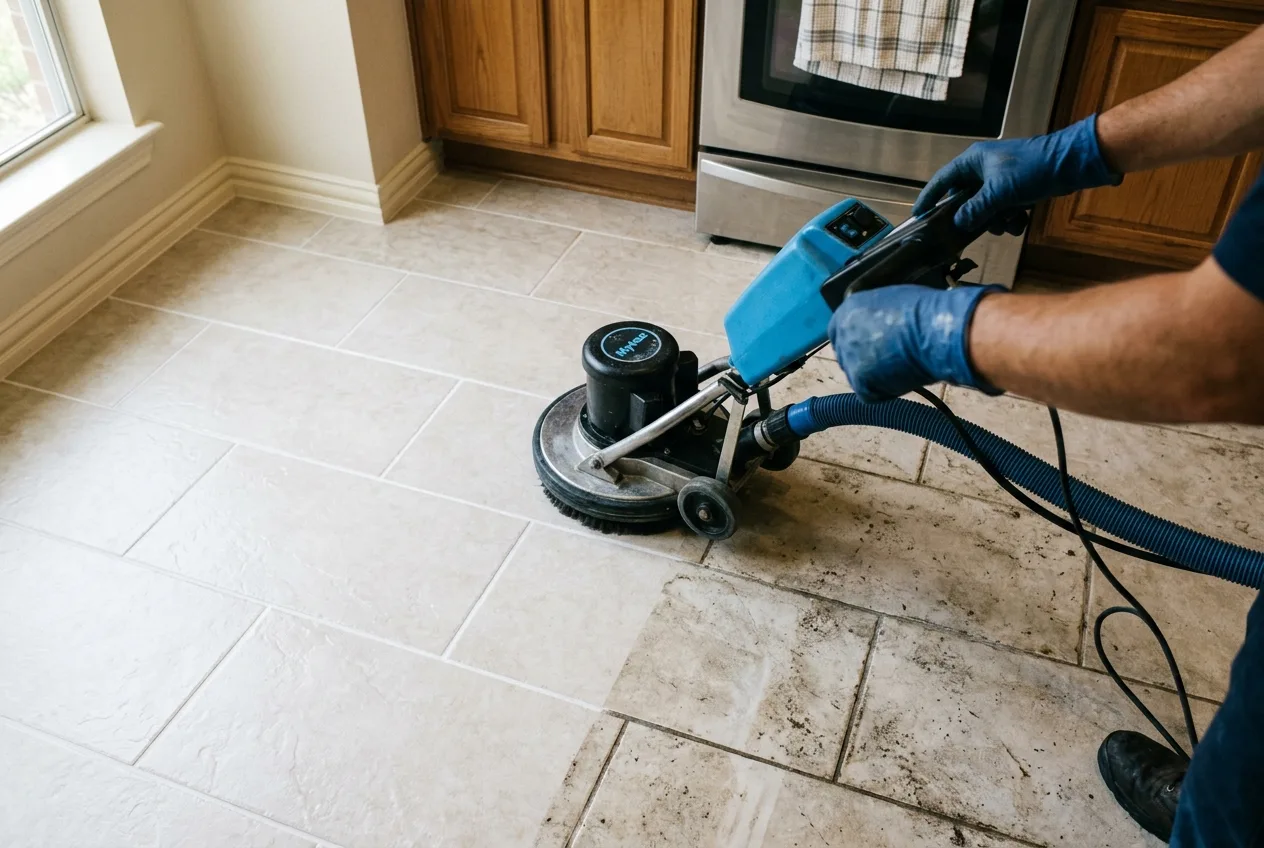
Professional tile and grout cleaning uses truck-mounted or portable hot-water extraction equipment that delivers cleaning solution at controlled temperature and pressure, agitates the grout lines with rotary or hand tools, and then vacuums the suspended soil out in the same pass. The result is grout that is genuinely clean through its depth, not just lightened at the surface. Depending on the size of the area and the degree of soiling, most residential jobs run between two and four hours. Grout sealing, when applied after cleaning, closes the pore structure so the next round of maintenance cleaning actually works the way it is supposed to.
Our process
-
Pre-inspection and surface assessment. Before any water or chemistry touches the floor, the tile type, grout width, existing sealer condition, and degree of soiling all get evaluated. Certain natural stone tiles, travertine, marble, slate, require different pH chemistry than ceramic or porcelain. Cracked or deteriorating grout joints get flagged before cleaning begins so pressure is not applied in a way that causes further damage.
-
Pre-treatment application. A pH-appropriate cleaning solution is applied to the grout lines and tile surface and allowed to dwell. Dwell time matters: the chemistry needs time to break the bond between the soil and the grout matrix. Skipping or shortening this step is one of the most common shortcuts that leaves grout looking only partially cleaned.
-
Pressurized hot-water extraction. A rotary extraction tool or hand tool delivers hot water at controlled pressure directly into the grout lines, mechanically agitating the loosened soil and vacuuming it out simultaneously. This is the step that distinguishes professional cleaning from consumer steam mops or scrub brushes, which can move soil around but cannot extract it.
-
Grout sealing. Once the grout is clean and dry, a penetrating sealer is applied to fill the pore structure. Sealer is not a coating that sits on top, it bonds within the grout and creates a barrier that slows future soil penetration and makes routine mopping effective again. Sealer application is typically included as part of a complete tile and grout cleaning service.
-
Final walk-through and maintenance guidance. Before the job is closed out, the cleaned area is inspected under raking light to confirm uniform results. You also get specific guidance on cleaning products and mop types that will keep the grout from re-soiling prematurely, because the wrong cleaner applied weekly can degrade a fresh seal in a matter of months.
What separates a good tile and grout cleaning from a bad one
The most common failure point is chemistry selection. Alkaline cleaners work well on grease-based soiling in kitchens. Acidic cleaners are sometimes used to remove mineral deposits and hard-water scale. Apply an acidic cleaner to polished marble or an alkaline cleaner to a surface with existing wax buildup, and you can etch the tile or create a residue that attracts soil faster than before. Operators who use one all-purpose cleaner on every surface regardless of tile type are cutting a corner that shows up in the results.
A second common problem is skipping the extraction step entirely. Some low-cost services scrub grout lines and then mop the floor, which leaves the suspended soil to resettle into the grout as the water dries. Proper extraction removes that soil from the room rather than redistributing it.
Grout restoration, filling cracked or missing grout joints before sealing, is often the step that determines whether a floor stays clean long-term. Clean, sealed grout with open or cracked joints will re-soil through those gaps and allow moisture to reach the substrate beneath the tile.
What does tile and grout cleaning cost?
Typical costs for professional tile and grout cleaning depend on square footage, tile type, soiling level, and whether sealing and grout restoration are included. Most homeowners pay somewhere in the ranges below, which reflect typical industry figures and are not quotes from ACS Enterprise.
| Scenario | Typical range |
|---|---|
| Single bathroom, ceramic tile | $150 - $300 |
| Kitchen floor, moderate soiling | $200 - $400 |
| Full home tile floors, 500-800 sq ft | $400 - $900 |
| Tile plus grout sealing included | Add $0.50 - $1.50 per sq ft |
| Grout restoration (regrouting damaged joints) | $5 - $25 per linear foot |
| Natural stone cleaning and sealing | $3 - $8 per sq ft |
Every floor is different, and ACS Enterprise provides a written scope before any work begins so you know exactly what is included. Homeowners insurance rarely covers routine tile and grout cleaning, but it may apply when soiling results from a covered water loss event, in that case, documentation of the damage source matters.
Seasonal and regional considerations
Midland’s climate creates specific tile soiling patterns worth knowing. The combination of low humidity, high dust, and caliche-heavy soil means tracked-in particulates are abrasive rather than just dirty. That grit works into grout lines and can physically erode the grout surface over time, making sealing more important here than in wetter climates where grout stays softer. Spring and fall wind events accelerate this, and any home with a tile entryway or mudroom sees the effects first. Grout in bathrooms and laundry rooms in this region also tends to develop hard-water scale from Midland’s mineral-heavy tap water, which requires a different cleaning approach than organic soil removal.
Service area
ACS Enterprise is based in Midland, TX and serves tile and grout cleaning customers throughout the Permian Basin region, including Odessa, Midland County, and surrounding communities. The city-specific service pages for individual areas link back to this page for full process and technical detail.
If your tile floors have reached the point where mopping is not making a visible difference, call ACS Enterprise at (432) 847-4704 to schedule your tile and grout cleaning assessment.
Frequently Asked Questions
Does homeowners insurance cover tile and grout cleaning?
How do I know if my grout needs to be sealed or fully replaced?
What is the difference between grout sealing and grout coating, and which do I need?
How long does grout sealer last, and how will I know when it needs to be reapplied?
Can tile and grout cleaning damage natural stone floors like travertine or marble?
Looking for the best tile & grout cleaning company in Midland?
ACS Enterprise provides tile & grout cleaning in Midland, TX and the surrounding area, and has served local property owners since 2019. Customers rate us 5.0 out of 5 stars across 362 Google reviews. We answer calls 24/7 — call (432) 847-4704 for immediate help.
Need Tile & Grout Cleaning now?
We respond 24/7 across Midland and surrounding TX cities.