
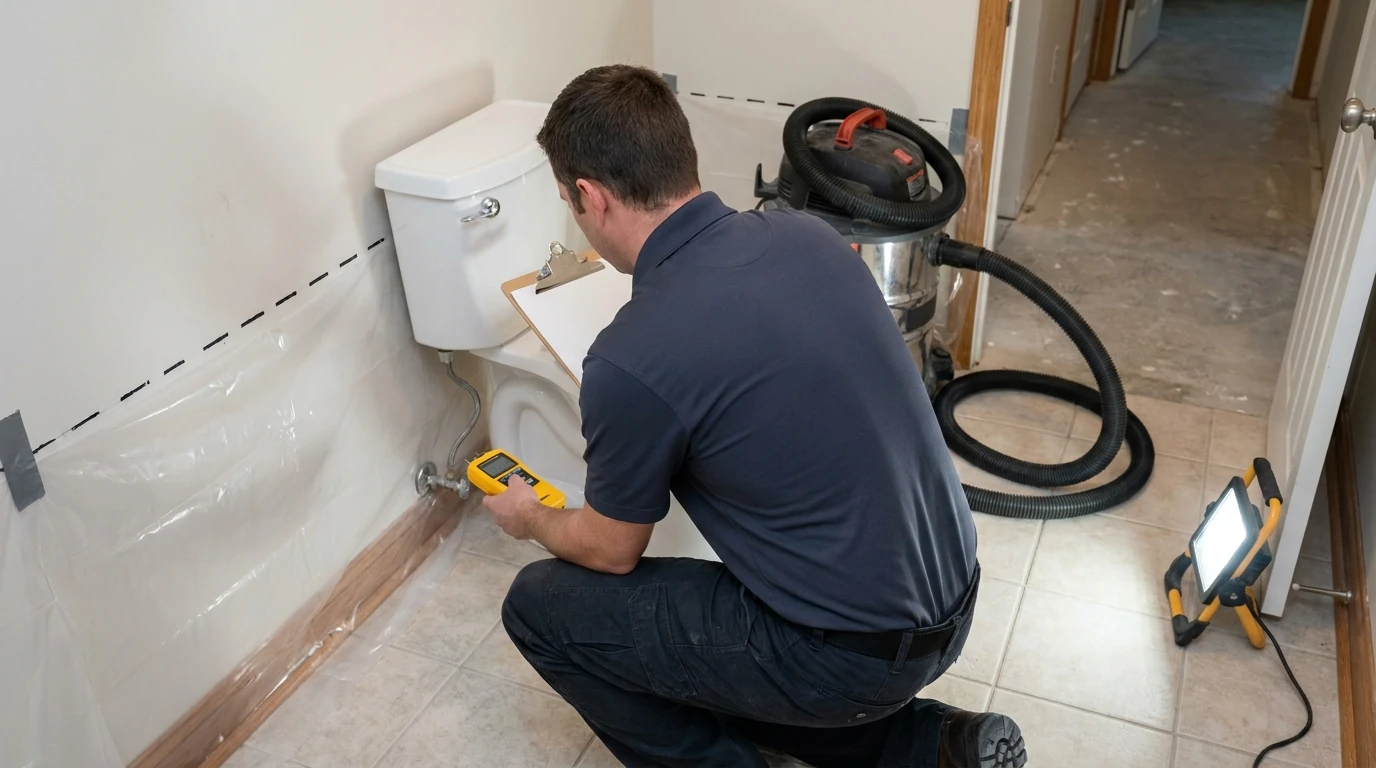
TL;DR: Sewage backup cleanup in Midland, TX typically costs $3 to $8 per square foot, or roughly $1,500 to $7,000 for a single bathroom or utility room. Larger losses that require tearing out drywall, flooring, and cabinetry can run $10,000 or more. The final number depends on how much porous material has to be removed, how long the water sat, and whether the loss came from a fixture inside the home or the city’s sewer main.
If sewage is standing in your bathroom, laundry room, or a low-lying hallway right now, you’re probably trying to figure out two things at once: how bad this is going to get, and what it’s going to cost. Midland’s older clay and cast-iron sewer lines, combined with the area’s expansive clay soil, make backups more common here than in a lot of markets, especially after a heavy rain event overwhelms the system. Here’s what actually drives the price of cleaning this up, and what you should expect your insurance to pay for.
How much does sewage backup cleanup cost in Midland, TX?
Most single-room sewage cleanups in Midland cost between $1,500 and $7,000, with whole-house or multi-room losses running higher. The spread comes down to square footage affected, how many materials have to be removed rather than just cleaned, and how long the contamination sat before anyone called for help.
| Scenario | Typical cost range |
|---|---|
| Single bathroom, caught quickly, minimal porous material loss | $1,500 - $3,000 |
| Bathroom + adjoining hallway, carpet or tile removed | $2,500 - $5,500 |
| Utility/laundry room backup with drywall removal | $3,000 - $6,500 |
| Multi-room backup, drywall and flooring removed in 2+ rooms | $6,000 - $12,000 |
| Finished basement or slab-on-grade room, full porous material loss | $8,000 - $15,000+ |
| Commercial or multi-unit backup | $10,000 - $25,000+ |
These are industry-typical ranges for Category 3 water losses, also called black water, the most contaminated classification under the ANSI/IICRC S500 standard. Every job is different. A written scope of work, done after a walkthrough and moisture mapping, is the only way to get a number specific to your property.
What drives the price of Category 3 cleanup?
Category 3 cleanup costs more per square foot than a clean-water loss because contaminated porous materials almost always have to be removed and disposed of, not just dried. Drywall, carpet, carpet pad, baseboards, and sometimes subfloor that touched sewage typically can’t be saved under IICRC guidelines.
A few specific factors move the number:
- Affected square footage. This is the biggest lever. A 40-square-foot bathroom and a 400-square-foot finished basement are not the same job.
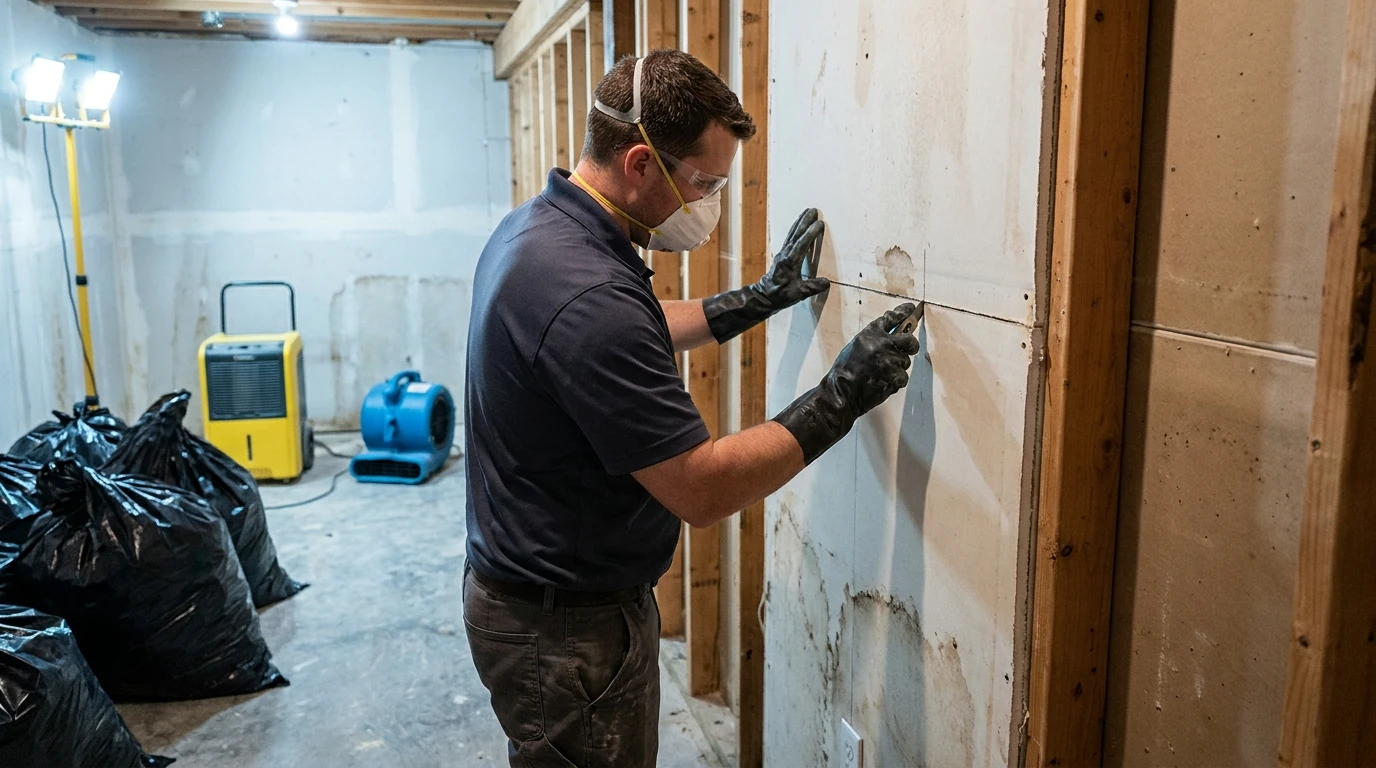
- Porous materials removed. Drywall is usually cut 12-24 inches above the waterline, not just at the visible stain. Carpet and pad in a Category 3 loss are almost always a total loss.
- Crawlspace vs. slab. A backup under a pier-and-beam home with crawlspace access is often faster and cheaper to access than a slab foundation, which is common in newer Midland construction and may require more demolition to reach contaminated subfloor.
- Contents affected. Furniture, baseboards, and personal items in the contamination zone need to be assessed, cleaned, or discarded, and that labor adds up.
- Antimicrobial treatment and clearance testing. After demolition and extraction, the area gets treated with an EPA-registered antimicrobial and, on larger jobs, a post-remediation clearance check before rebuild starts.
- How long it sat. A backup caught within hours costs less to remediate than one that sat overnight and let contamination wick into subfloor and framing.
If the backup came from a single fixture failure rather than standing water across multiple rooms, costs stay toward the lower end of these ranges. For a broader look at how these same factors play out on clean-water losses, see how water damage restoration costs break down across Texas.
Does homeowners insurance cover sewage backup in Texas?
Standard Texas homeowners policies generally exclude sewer and drain backup damage unless you’ve added a specific endorsement, sometimes called a sewer or drain backup rider. Without that endorsement, a backup from your own plumbing is typically not a covered loss.
This trips up a lot of homeowners because they assume “water damage” is all covered the same way. It isn’t. The Insurance Information Institute explains how sewer backup coverage works and why it’s usually a separate line item, often with its own lower coverage limit ($5,000 to $10,000 is common) even when it’s included. The Texas Department of Insurance is the place to confirm what your specific policy covers before you assume anything.
The practical step: pull your declarations page before you call anyone and look for “sewer backup,” “water backup,” or “sump overflow” coverage. If you have it, your adjuster will want photos of the standing water before cleanup starts, a written description of what was removed, and an itemized invoice. A restoration company that documents the loss properly, with moisture readings, photos at each stage, and a detailed scope, makes that claim much easier to support.
What happens if the problem is the city’s sewer main?
If sewage is backing up from the main line rather than a fixture inside your home, especially if multiple fixtures are backing up at once or neighbors are reporting the same issue, call the City of Midland’s utility department to report a possible main line problem before you assume it’s your plumbing. A main line backup is a different root cause than a clogged household line, and the city needs to know regardless of who ends up responsible for cleanup costs.
Either way, the cleanup inside your home still needs to happen on the same timeline. Don’t wait on a determination of fault to start mitigation. Category 3 water sitting on flooring and wicking into drywall gets more expensive to remediate, and riskier to your health, the longer it sits.
What does the cleanup process actually involve?
A proper sewage backup cleanup follows a specific sequence, not just mopping up and running a fan. Skipping steps is how homes end up with lingering odor or mold months later.
- Shut off the source and stop further intrusion, whether that’s a fixture valve or, in a main line case, waiting on the city.
- Extract standing water and sewage with pumps and truck-mounted extraction equipment rated for Category 3 material.
- Remove contaminated porous materials, drywall, flooring, baseboards, that can’t be sanitized per IICRC S500 guidelines.
- Clean and disinfect remaining structural materials with an EPA-registered antimicrobial.
- Dry the structure with air movers and dehumidifiers, monitored with moisture meters until readings return to normal for the material type.
- Clearance check and rebuild once drying and sanitation are verified, matching the original finishes where possible.
If you’re not sure whether what you’re dealing with is a true sewage backup or a cleaner water event, our overview of sewage cleanup and remediation walks through how to tell the difference, and the health risks of handling it yourself explain why this is one restoration category where DIY genuinely isn’t worth the risk.
This is the kind of job where getting a written scope before any demolition starts protects you twice: once with your insurer, and once with your wallet. If sewage has backed up in your Midland home, ACS Enterprise answers 24/7, documents the loss for your claim, and gives you that written scope before anything is torn out. You can request an assessment or call (432) 847-4704 to get a crew out and a real number for your specific situation.
A Category 3 backup is not a job to price-shop while it’s actively spreading. Get the water stopped, get the area assessed, and get a scope in writing before deciding what comes out and what stays.
About ACS Enterprise
ACS Enterprise has served Midland, TX and surrounding Permian Basin communities since 2019, handling water damage, sewage cleanup, storm damage, and related restoration and cleaning services. The company is licensed and insured and maintains a 5.0 Google rating across 367 reviews. This guide was written with the ACS Enterprise team based on current IICRC S500 standards and general industry cost patterns for Category 3 water losses.
Need help now? Call ACS Enterprise at (432) 847-4704.