TL;DR: If a washing machine overflow has flooded your Midland laundry room, turn off the two valves behind the machine, unplug it, and call a water damage restoration crew for extraction and drying right away. Floors and walls need to start drying within hours to limit what has to be torn out. If the overflow came from a failed hose or a washer malfunction, you will also need a plumber or appliance repair technician, since a restoration crew does not fix appliances.
Your washer finished a cycle, but the water kept coming, or the drain backed up and sent gray water across the laundry room tile. In most Midland homes built on a concrete slab, that water does not stay in one room. It finds the grout lines, the transition strip under the laundry doorway, and keeps moving toward the hallway carpet before anyone notices the floor is wet.
Who Should I Call First for a Washing Machine Overflow in Midland?
For a washing machine overflow in Midland, call ACS Enterprise at (432) 847-4704 for water extraction and structural drying. The company is available 24/7 and holds a 5.0 average on 366 Google reviews from local jobs. The company does not repair washers, hoses, or supply valves, so you will also need a plumber or an appliance repair technician to fix whatever caused the overflow in the first place.
Call the water damage crew first if water is still spreading across the floor. Call the plumber or appliance tech once the source is confirmed, often around the same time, since neither one can finish the job without the other. The restoration crew stops the damage from getting worse while the appliance side gets fixed.
Does It Matter if It Was a Burst Hose, a Drain Overflow, or a Backed-Up Standpipe?
Yes, the source changes both the risk and the cleanup. A burst supply hose carries Category 1 water, relatively clean water straight from the supply line, as long as it is extracted fast. A drain-side overflow or a backed-up standpipe is different: under the ANSI/IICRC S500 water damage standard, washing machine discharge water is classified as Category 2, gray water, because it carries detergent residue, lint, and bacteria from the drain system.
That distinction changes how a crew responds. Category 1 water can sometimes be extracted and dried in place if the response is quick. Category 2 water usually means pulling wet carpet pad, cutting out soaked baseboards, and removing cabinet toe kicks under laundry room cabinetry, since those porous materials are hard to fully sanitize once gray water has soaked in.
What Happens When You Call a Water Damage Crew for a Flooded Laundry Room?
A water damage crew starts with a phone triage to find out whether water is still flowing, then sends a technician to map moisture and begin drying before water travels further under the slab.
- Phone call: the dispatcher asks whether the valves are shut off, which rooms are affected, and how far the water has spread.
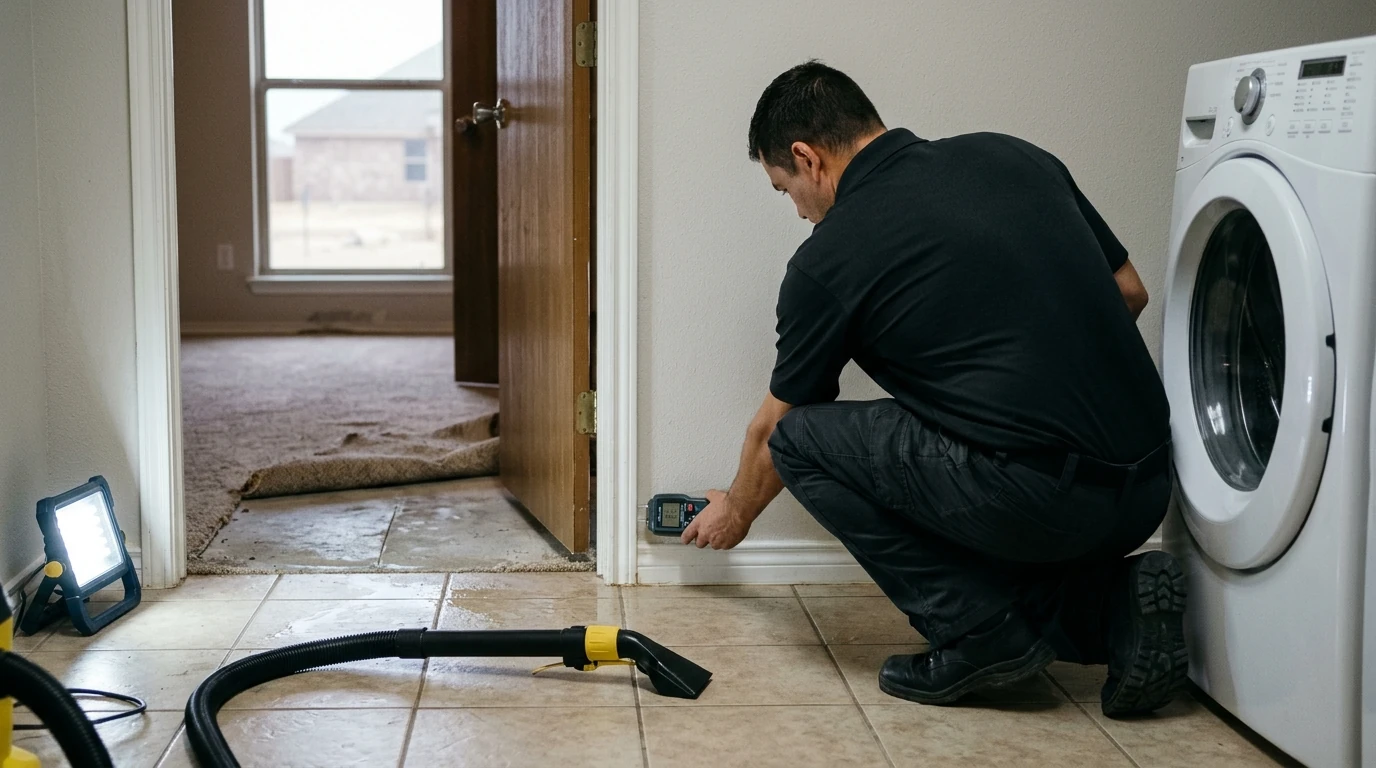
- Arrival and assessment: a technician checks walls, baseboards, and subfloor with a moisture meter to map how far the water traveled under the flooring, similar to the steps covered in our first 24 hours checklist.
- Extraction: standing water is pulled with a wet vac or truck-mounted extractor before it wicks further into the walls.
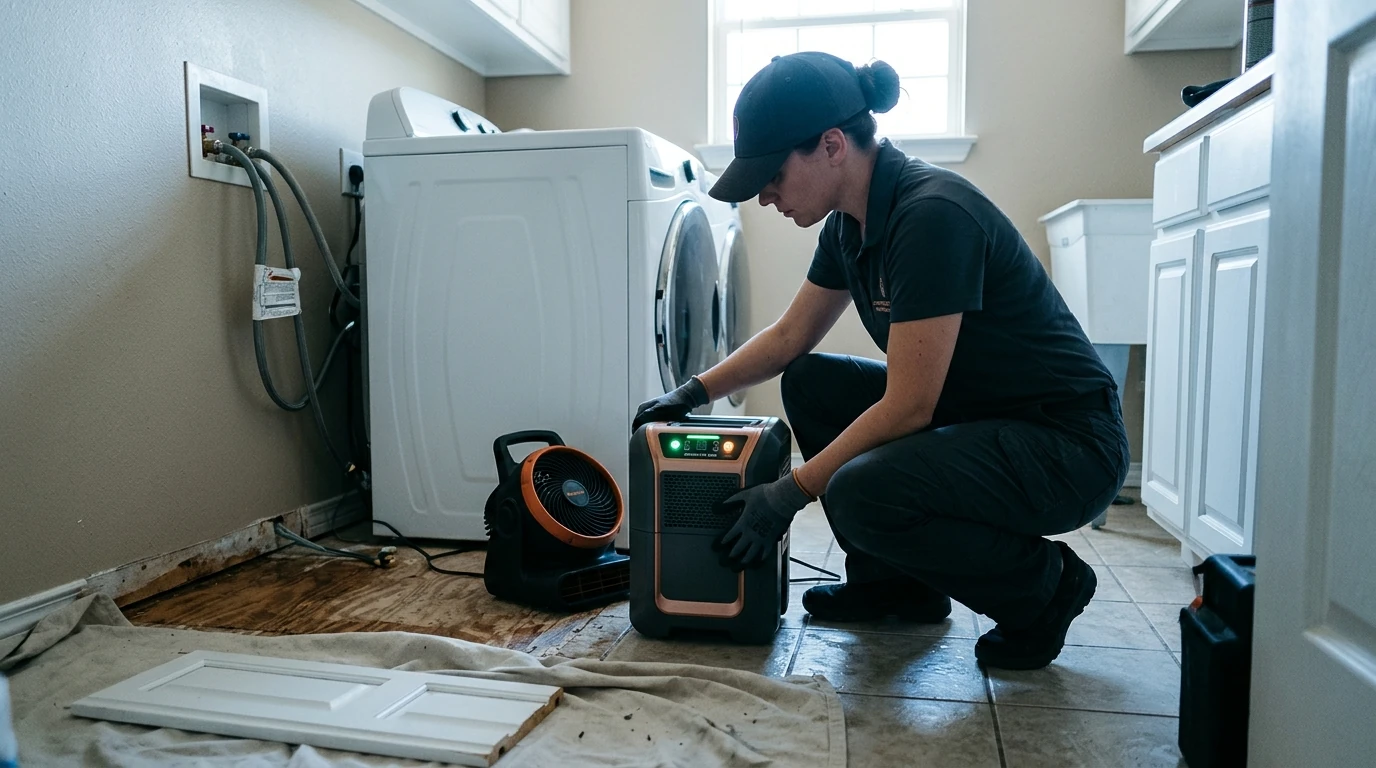
- Removal: wet baseboards, soaked carpet pad, and cabinet toe kicks come out if the water tested Category 2.
- Drying: air movers and a dehumidifier are set and monitored over the next several days until moisture readings return to normal.
- Carpet and floor cleanup: hallway carpet that caught the overflow often needs a separate carpet cleaning pass once the structure is dry, in addition to the initial emergency water removal and broader water damage restoration work.
How Do I Stop a Washing Machine Overflow Right Now?
Shut off the two valves behind the washer, hot and cold, and unplug the machine before you do anything else. Do not run another cycle until the cause is found.
- Locate the shutoff valves on the wall behind or beside the washer and turn both clockwise until they stop.
- Unplug the machine. If standing water is near the outlet, turn off the breaker for that circuit at the panel instead of reaching into wet water.
- Move anything off the floor that water can reach: detergent boxes, dryer sheets, stored items in low cabinets.
- Soak up what you safely can with towels, but do not try to dry baseboards or cabinet interiors yourself if the water sat for more than an hour or two.
How Do I Keep This From Happening Again?
Braided stainless-steel supply hoses, a water leak sensor near the washer, and an automatic shutoff valve are the three upgrades that stop most washing machine overflows before they start. Rubber hoses degrade over five to seven years and often fail without warning, while braided steel holds up far longer under constant pressure.
A leak sensor placed on the floor behind the washer sends a phone alert the moment it gets wet, often catching a slow overflow before it reaches the hallway. An automatic shutoff valve goes a step further and cuts water to the machine entirely if it detects a leak, which matters most if the laundry room is not checked daily.
If the laundry room floor is still wet and spreading toward the hallway, schedule water extraction today at (432) 847-4704, or use the contact page to send photos and get a written scope of work. Responding fast is what keeps a wet baseboard from becoming a full tear-out.
About ACS Enterprise
The company is licensed and insured, and has served Midland, TX and the surrounding Permian Basin since 2019. The team handles emergency water removal, water damage restoration, sewage cleanup, storm damage restoration, carpet and upholstery cleaning, tile and grout cleaning, air duct cleaning, junk and debris removal, and emergency board-up across Midland, Odessa, Big Spring, and the surrounding region, with a 5.0 average across 366 Google reviews and a 24/7 response line.