
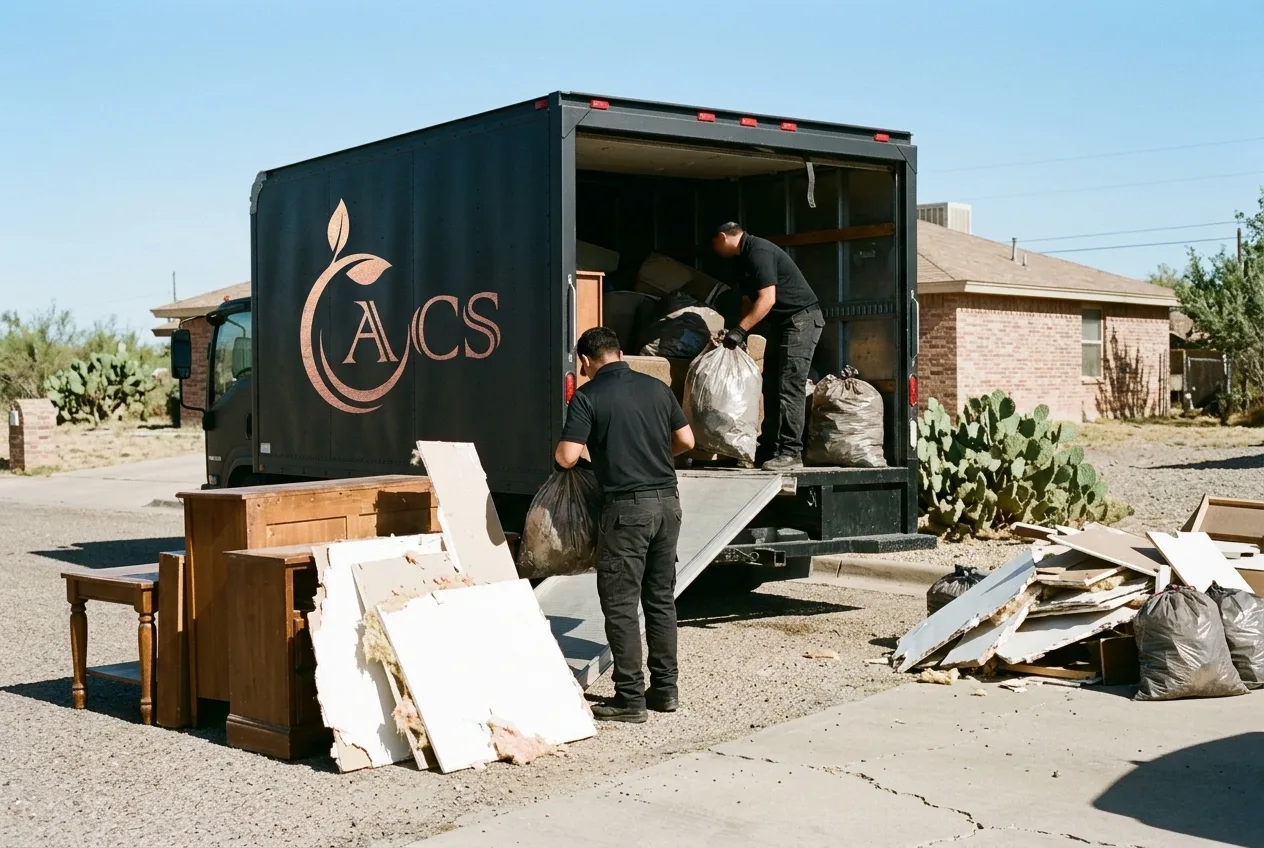
Junk & Debris Removal in Midland
Junk & debris removal in Midland and surrounding areas. Insurance billing accepted. Call (432) 847-4704.
A garage packed with broken furniture, a backyard buried under storm debris, a rental property left with appliances, mattresses, and years of accumulated junk, these situations share one thing: they stop everything else from moving forward. Whether you’re preparing a property for sale, clearing out after a tenant, or just reclaiming space that’s been lost to clutter, the problem isn’t just the stuff itself. It’s the sorting, the heavy lifting, the hauling, and the question of what goes where. That’s exactly what ACS Enterprise handles.
What Junk & Debris Removal actually involves
Junk and debris removal is more physical and logistical than most people expect. It’s not a single pickup. A full house cleanout or post-storm debris haul involves assessing what’s present, sorting by disposal method (landfill, recycling, donation, hazardous material), loading it safely, and transporting it to the right facility. Large items like refrigerators, water heaters, and sectional sofas require equipment and a crew. Wet or contaminated debris from a water loss or storm event requires careful handling so it doesn’t spread damage to clean areas during removal.
For garage cleanouts and property cleanouts, the volume alone is the challenge. A two-car garage can hold several tons of material once you account for shelving, tools, boxes, and forgotten furniture. Storm debris, downed limbs, roofing material, fence sections, insulation, adds weight and bulk that a single truck run rarely covers. ACS Enterprise arrives with the right crew size and hauling capacity for the scope of the job, not a minimum crew that makes three extra trips.
Timeline varies by job size. A single-room cleanout can be completed in a few hours. A full estate or property cleanout typically runs one to two days depending on access, sorting requirements, and total volume.
Our process
-
Walkthrough and scope assessment. Before anything moves, the crew walks the space with you. This identifies what stays, what goes, any items that need special handling (electronics, paint, propane tanks), and how access points affect the work. You won’t be charged for surprises that should have been visible from the start.
-
Sorting and staging. Items are separated on-site into categories: general haul-away, recyclables, and anything requiring separate disposal. This step keeps the job clean and keeps you out of liability for improper disposal of regulated materials.
-
Loading and removal. Heavy items come out first. The crew uses dollies, straps, and appropriate lifting technique to protect floors, door frames, and walls during removal. Debris is loaded directly into the hauling vehicle rather than staged in the driveway, which matters for HOA compliance and neighbor relations.
-
Site sweep. Once the bulk material is out, the crew sweeps the cleared area. You’re not left with loose screws, broken glass, or a layer of grime where the furniture used to be. The space is ready for its next use.
-
Responsible disposal. Material goes to the appropriate facility. General junk goes to a licensed disposal site. Recyclables are separated. Items in usable condition can be directed to donation drop-offs when logistics allow. You get a clear account of where everything went.
What separates a good junk removal response from a bad one
The most common problem with junk and debris removal isn’t the hauling itself, it’s what gets missed or mishandled. A few things to watch for:
Underestimating volume. A crew that arrives with one truck for a three-bedroom cleanout will either leave material behind or charge for multiple return trips at a higher effective rate. A proper walkthrough before the job starts prevents this.
Improper disposal of regulated items. Freon-containing appliances (refrigerators, window AC units, dehumidifiers) must be handled by certified technicians before disposal. Latex paint, motor oil, and certain electronics can’t go to a standard landfill. Haulers who skip these steps can leave the property owner exposed to fines.
Debris left in walls or under flooring during water-loss cleanouts. When junk removal follows a water damage event, wet insulation, saturated drywall, and soaked flooring materials need to come out completely. Leaving even a small section behind creates a moisture reservoir that can cause secondary damage. ACS Enterprise handles the water damage and debris removal side of these jobs and can connect you with the right specialist if mold assessment or structural work is needed.
No documentation for insurance claims. When debris removal is part of an insured loss, the carrier needs an itemized record of what was removed and why. Photos, item lists, and a written scope protect your claim.
What does Junk & Debris Removal cost?
Typical costs for junk and debris removal depend on volume, access, and the nature of the material. Most homeowners pay somewhere in the following ranges for common scenarios:
| Scenario | Typical industry range |
|---|---|
| Single-room or garage cleanout | $200 - $600 |
| Full house or estate cleanout | $800 - $2,500 |
| Storm debris removal (yard and exterior) | $400 - $1,200 |
| Post-water-loss debris and material removal | $600 - $2,000 |
| Appliance and large-item removal (per item) | $75 - $200 |
| Hoarding or severely cluttered property | $1,500 - $5,000+ |
These are typical industry figures, not quotes. Every job is different, and ACS Enterprise provides a written scope before work begins so you know exactly what you’re agreeing to. Homeowners insurance may cover debris removal when it’s directly tied to a covered loss, such as storm damage or a water event, your policy’s debris removal provision is the place to check, and ACS Enterprise can provide the documentation your adjuster needs.
Seasonal and regional considerations
In Midland and the Permian Basin, wind is the constant variable. Spring storms regularly bring down fencing, scatter roofing materials, and deposit debris across yards and driveways. The flat terrain means debris travels farther than in other regions, and properties on larger lots accumulate more than a standard suburban yard. Summer heat makes outdoor debris removal physically demanding and time-sensitive, material sitting in direct sun degrades faster and can become a fire hazard. Scheduling promptly after a storm event keeps the cleanup manageable.
For interior cleanouts, the region’s dry climate means stored items often stay in better condition longer, which can make donation sorting more worthwhile. It also means dust accumulation in garages and storage spaces runs heavy, so a proper sweep after removal matters more than it might elsewhere.
Service area
ACS Enterprise is based in Midland, TX and serves surrounding communities throughout the Permian Basin region. The city-specific pages for junk and debris removal in Odessa, Andrews, Big Spring, and other nearby areas link back here for full service detail.
Ready to clear the space? Call ACS Enterprise at (432) 847-4704 to schedule your junk and debris removal walkthrough.
Frequently Asked Questions
Does homeowners insurance cover junk and debris removal?
What items can't go in a standard junk removal haul?
How do I know how much of the space will actually be cleared in one visit?
Can you handle debris removal that's part of a water damage cleanup?
Do I need to be on-site during the cleanout?
Looking for the best junk & debris removal company in Midland?
ACS Enterprise provides junk & debris removal in Midland, TX and the surrounding area, and has served local property owners since 2019. Customers rate us 5.0 out of 5 stars across 362 Google reviews. We answer calls 24/7 — call (432) 847-4704 for immediate help.
Need Junk & Debris Removal now?
We respond 24/7 across Midland and surrounding TX cities.