
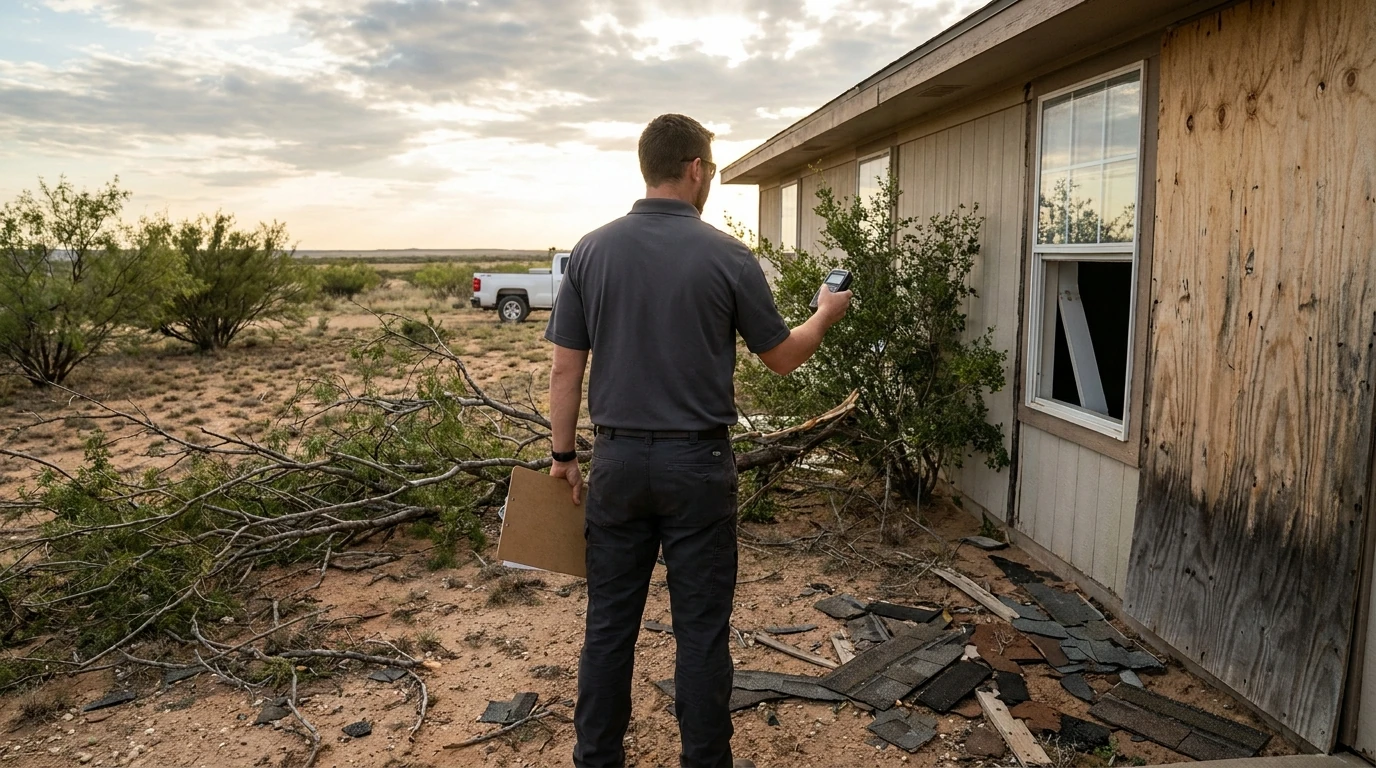
TL;DR: Storm damage restoration in Midland, TX typically costs $1,500 to $15,000, depending on how much water got inside, how many rooms are affected, and how much debris has to be hauled away. Most homeowners pay $3,500 to $8,000 for a moderate loss involving water extraction, structural drying, and yard cleanup. Roof replacement is priced separately by a roofer and is not included in these ranges. Texas wind/hail insurance deductibles are usually a percentage of your dwelling coverage, not a flat dollar amount, and state law prohibits any contractor from waiving or absorbing that deductible for you.
If a West Texas wind event just put a tree limb through your fence, blew out a window, or let rain pour through a damaged roofline into your living room, you’re probably trying to figure out two things at once: what the cleanup is going to cost, and what your insurance is actually going to pay for. Those are separate questions with separate answers, and mixing them up is how homeowners end up either underpaying out of pocket or arguing with an adjuster over something their policy never covered in the first place.
How much does storm damage restoration cost in Midland, TX?
Most Midland homeowners pay between $1,500 and $8,000 for storm damage restoration, with severe interior losses running higher. The exact number depends on how much water intruded, how many rooms it touched, and how much debris and damaged material has to come out.
These figures reflect typical industry ranges for the restoration side of a storm loss: water extraction, structural drying, cleanup, and debris haul-off. They don’t include roof replacement, which a licensed roofer prices separately based on square footage and material. A written, itemized scope before work begins is the only way to know your specific number, because every loss is different.
| Scenario | Typical Cost Range |
|---|---|
| Emergency board-up or window tarping | $300 - $900 |
| Yard and property debris removal (limbs, fencing, siding) | $300 - $1,200 |
| Single-room water extraction and drying | $1,500 - $3,500 |
| Multi-room water extraction and structural drying | $3,500 - $8,000 |
| Combined mitigation: extraction, drying, and debris haul for a moderate loss | $4,000 - $7,000 |
| Major loss with Category 3 water (sewage backflow or ground-level flooding) | $8,000 - $15,000+ |
What drives the cost up or down?
The biggest cost factors are water category, square footage affected, and how fast the water gets removed. A room dried within 24 hours costs far less than one left standing for three days, because every extra day adds equipment rental and increases the odds that drywall and insulation have to be torn out instead of dried in place.
Water category matters a lot. Clean rainwater intrusion (Category 1) is the cheapest to remediate. If storm runoff picked up soil, yard chemicals, or sewage on its way into the house, it becomes Category 2 or 3, which requires more aggressive removal of porous materials and follows a stricter protocol under the S500 water damage standard.
Debris volume changes the haul-off bill. A few tree limbs and shingle fragments might run a few hundred dollars. A collapsed fence section, downed tree, or storm-scattered roofing debris across a larger lot pushes that number up, since it’s priced by volume and disposal fees, not a flat rate.
Material replacement adds up fast. Wet drywall, baseboard, carpet pad, and insulation usually can’t be saved once they’ve been soaked for more than 24-48 hours. Reconstruction materials are priced separately from the drying and extraction work itself.
One thing this guide intentionally leaves out: roof replacement pricing. That’s a distinct trade with its own cost structure based on square footage, pitch, and material, and it should come from a licensed roofing contractor, not a restoration estimate. If you’re also dealing with interior water damage unrelated to a recent storm, our TX water damage cost guide breaks down those numbers separately.
How does the Texas wind/hail deductible actually work?
Texas wind and hail deductibles are usually a percentage of your home’s insured value, not a flat dollar figure like a standard deductible. A 1% deductible on a $300,000 dwelling coverage limit means you’re responsible for the first $3,000 before your policy pays anything on a wind or hail claim.
These percentage deductibles, sometimes 1%, 2%, or higher, are set in your policy declarations page and regulated under rules published by the Texas Department of Insurance. They’re separate from your regular deductible, and many homeowners don’t realize they have one until a storm claim hits.
Texas law also bars any contractor from offering to waive, rebate, or absorb your deductible as a way to win your business. That practice is illegal in Texas, and a company offering it is a warning sign, not a deal. Legitimate restoration work is billed on the actual scope, and you pay your deductible like any other covered loss.
It’s also worth separating wind/hail coverage from flood coverage. Standard Texas homeowners policies cover wind-driven rain that enters through storm-created openings (a blown-out window, a damaged roof), but they typically exclude rising groundwater or flash-flood intrusion, which falls under a separate flood policy. Our storm damage insurance claim checklist walks through documentation that helps either claim move faster.
What actually happens during a storm damage restoration job?
A storm restoration job runs through five phases: assessment, extraction, drying, debris removal, and documentation for your insurer. Here’s what each one covers:
- Safety assessment and documentation. The crew checks for immediate hazards (exposed electrical, compromised structure) and photographs the damage before anything is moved or removed.
- Water extraction. Standing water is pulled with truck-mounted or portable extraction equipment if the storm let rain or runoff inside.
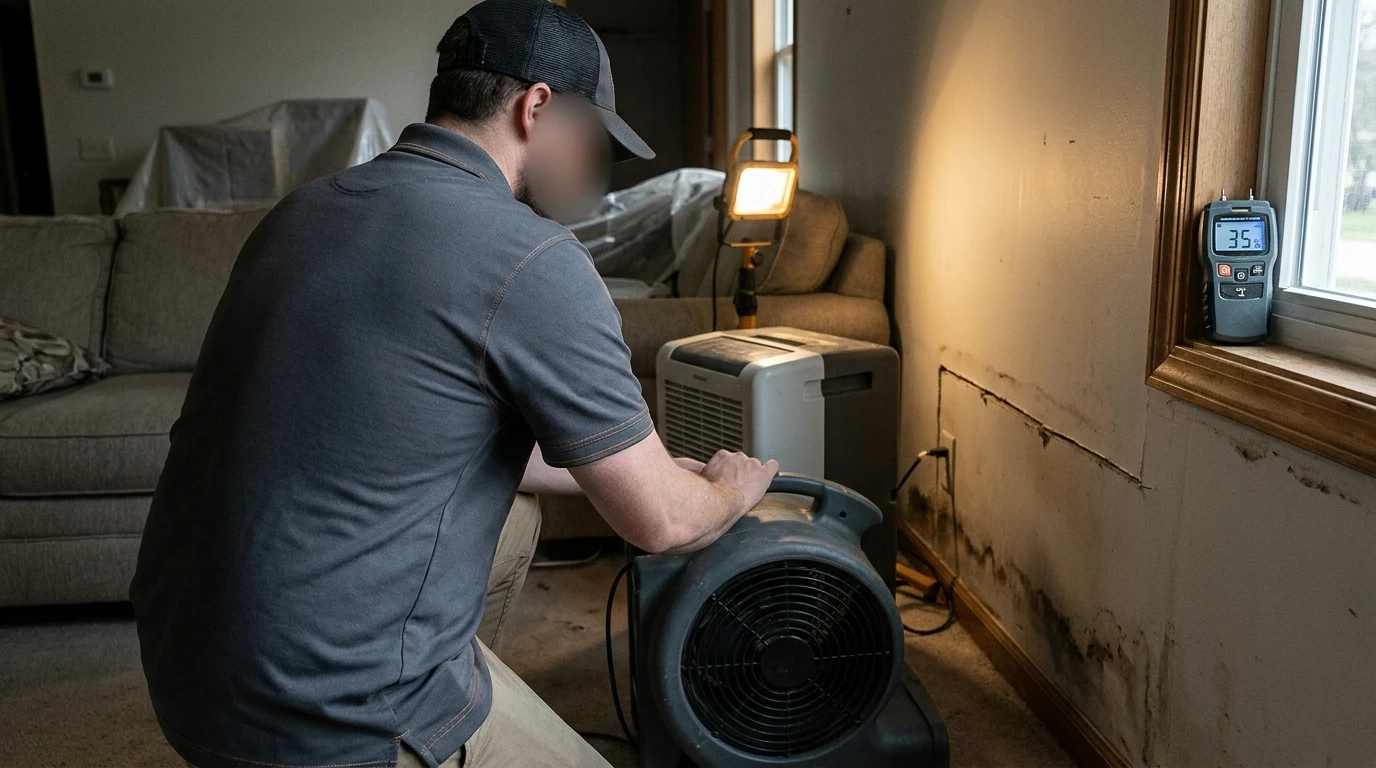
- Structural drying. Air movers and dehumidifiers run until moisture meter readings confirm the structure is dry, following S500 drying protocols.
- Debris removal and haul-off. Downed limbs, damaged fencing, torn siding, and non-salvageable interior materials are cleared and hauled away. A dedicated junk and debris removal crew often runs this phase separately from the drying equipment.
- Documentation for your adjuster. Moisture logs, drying charts, and a written scope of work go to your insurance company to support the claim.
Who should handle storm damage restoration in Midland?
Storm cleanup that involves interior water, standing moisture, or a mix of debris and wet materials is a job for a licensed restoration company, not a weekend DIY project, because undried materials behind drywall turn into a mold problem within 24 to 48 hours. ACS Enterprise handles storm damage restoration and debris removal across Midland and the surrounding Permian Basin, and provides a written scope before work starts so there are no surprises when the invoice arrives.
If your loss is a single downed limb and some loose shingles with no interior water, a handyman or general contractor can often handle it. Once water has gotten inside, call a restoration company first, before you call anyone else, so drying starts before mold has a chance to set in.
Get a storm damage assessment scheduled before you sign anything with your insurer, so your documentation and scope of work are already in hand when the adjuster calls.
About ACS Enterprise
ACS Enterprise is a locally owned restoration company serving Midland, Odessa, and the surrounding Permian Basin since 2019. The team handles water damage restoration, storm damage restoration, sewage cleanup, and junk and debris removal, among other restoration and cleaning services, and is licensed and insured for residential and commercial work in West Texas.
Need help now? Call ACS Enterprise at (432) 847-4704.