TL;DR: Storm and wind damage restoration covers board-up, water extraction from wind-driven rain intrusion, drying out affected structures, and removing debris after high winds, hail, or a dust storm damage a roof, siding, or windows. In Andrews County and across the Permian Basin, straight-line winds over 60 mph are common enough that insurers expect documentation within days, not weeks. Call a restoration crew before the drywall or insulation starts absorbing moisture.
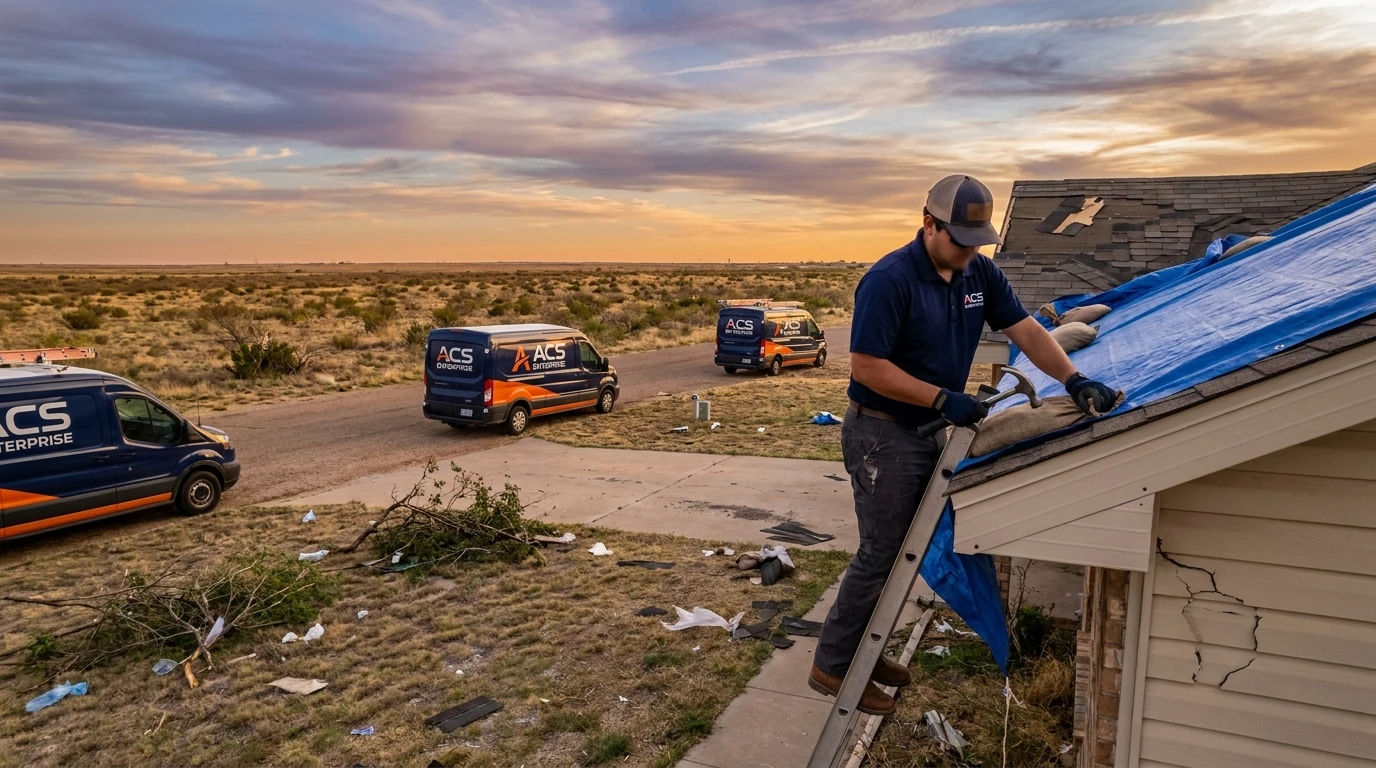
If a wind event just tore shingles off your roof or blew a window out on a property near Andrews, you’re probably staring at a tarp job, a wet ceiling, and an insurance adjuster you haven’t called yet. West Texas wind doesn’t always come with the drama of a hurricane, but a 70 mph gust line moving across flat, exposed terrain around Andrews County does the same damage: lifted roofing, cracked siding, and rain pushed sideways into places it was never supposed to reach. The restoration work that follows isn’t just repair, it’s stopping secondary damage before it starts.
What Does Storm and Wind Damage Restoration Actually Include?
Storm and wind damage restoration is the process of stabilizing a property after wind, hail, or a related storm event, then drying out and cleaning up whatever moisture got in. That typically means board-up, water extraction, structural drying, and removing storm debris before the next weather system arrives.
The work usually happens in this order: stop active intrusion (your roofer covers the roof, a broken window gets boarded), extract any standing water, then set air movers and dehumidifiers to dry framing and insulation to the IICRC S500 standard for water damage restoration. If wind-driven rain soaked carpet or upholstered furniture, that gets cleaned or extracted separately. Debris from downed branches, torn siding, or collapsed outbuildings gets hauled off so the property isn’t a liability while repairs happen.
In Andrews, where properties tend to sit on wide, exposed lots with little tree cover to break wind, the exterior envelope takes the brunt of a storm. Metal roofing and vinyl siding common in the area can look fine from the ground while wind has already lifted seams enough to let water through.
How Do You Know If Wind Damage Is Serious Enough to Call a Restoration Company?
Any wind event that brings water inside the structure, cracks a window, or visibly lifts roofing material is serious enough to call a restoration company the same day. Waiting even 48 hours lets moisture spread into drywall, insulation, and subfloor where it’s harder and more expensive to dry out.
Signs worth acting on right away:
- Water stains spreading on a ceiling or upper wall after a storm
- Shingles, tiles, or roofing granules on the ground around the foundation
- A door or window that no longer seals, letting wind and rain through the gap
- Siding panels cracked, bowed, or missing
- A musty smell starting within 24-48 hours of the storm, which usually means moisture is already trapped
Damage that looks cosmetic from the street, a few missing shingles, a dented gutter, can still mean water got into the attic or wall cavity during the event. A moisture meter reading on the drywall or decking tells you what the eye can’t.
What Should You Do in the First 24 Hours After a Wind Storm?
In the first 24 hours, stop further water entry, document the damage with photos, and get moisture out before it spreads. Order matters here, because every hour wet building material sits is an hour closer to secondary damage.
- Photograph everything before you touch it. Wide shots of the exterior, close-ups of the specific damage, and any interior water intrusion. This is the documentation your adjuster will ask for.
- Tarp or board open areas to stop more wind and rain from getting in, especially if another system is forecast.
- Move anything in the path of water (furniture, electronics, rugs) and start extracting standing water if it’s safe to do so.
- Shut off power to any circuit near water intrusion if you’re not sure it’s safe.
- Call a restoration company for a moisture assessment, even if the visible damage looks minor. Hidden moisture in insulation or subfloor doesn’t show up for days, sometimes as mold or a soft spot in the floor.
Our storm damage insurance claim checklist walks through exactly what to document before you call your insurer, which can speed up approval.
Will Homeowners Insurance Cover Wind and Storm Damage?
Most homeowners and commercial property policies in Texas cover sudden wind and storm damage, including hail, as long as the policy doesn’t carry a separate wind/hail exclusion or a high wind deductible. Many West Texas policies carry a percentage-based wind/hail deductible rather than a flat dollar amount, so it’s worth checking your declarations page before assuming full coverage.
What typically gets covered: roof damage from wind or hail, broken windows from wind-blown debris, water damage that results directly from the storm event, and the restoration work needed to dry and clean up afterward. What’s often excluded or limited: damage from long-term neglect (a roof that was already failing before the storm), and flooding from rising water, which usually requires separate flood coverage through FEMA’s National Flood Insurance Program.
A written scope of work and dated photos from the restoration crew make the claims conversation faster. Adjusters move quicker when the documentation is already organized.
If wind just tore into a roof or siding near Andrews, Midland, or anywhere else across the Permian Basin, getting a moisture assessment scheduled now is the cheapest decision you’ll make this week. Letting it sit costs more every day it’s wet.
About ACS Enterprise
ACS Enterprise is a licensed and insured, locally owned restoration company serving Midland, Andrews, and the surrounding Permian Basin since 2019. Their crews handle storm damage restoration, emergency water removal, water damage restoration, sewage cleanup, and junk and debris removal across West Texas. Work is documented with photos and a written scope at every job to support insurance claims.